 A nice waterfall in southern Guam. I can't remember the name of it... If I do, I'll edit this.
16 November 2006


Japan, USA

A shot of the central tourist area of Tumon, Guam.
In October, I went to Guam with my gf and her mother. After what I saw, I’m making a case to change the name of the island to “Japan, USA.”
We were looking forward to the trip. My gf’s mother had never been out of Japan, and we thought Guam would be a good introduction to the rest of the world. As for me, I was looking forward to the opportunity to be on American soil again, and to eat some American food that I was missing.
Once we landed in Guam, I knew things would be unlike what I expected. Announcements at Guam International were in Japanese first, then English. When we got on the hotel shuttle bus, I was the only non-Japanese out of 50 passengers. At the hotel, signs were in Japanese and English. Then in the hotel room, the bathroom was decked with a Japan-made toilet and a Japanese-style removable shower head.
When we went around the main tourist area of Tumon, you were lucky if you saw anyone other than a Japanese. Signs to some stores were in Japanese only. All of this in a U.S. territory.
On the first full day, my gf and I went to do something called a seawalk. One of the seawalk staff made it a point to make his way through the crowd of tourists over to me, and he said, “Hey man, I wanted to personally shake your hand! You’re the first American tourist we’ve seen all year.” Keep in mind that this was October.
It went like that the entire trip. Tour staffers – almost all of them Guam natives - would automatically speak Japanese to me at first, before they realized that I was a fellow American. The only time I felt like I was not in Japan was the day we rented a car and drove around the southern part of the island. That was the best part of the trip.
My gf felt the same way – not surprising, considering how much she likes to travel. But my gf’s mother felt the same as well. I guess she was looking forward to experiencing something other than Japan, and she didn’t have the chance to in Guam.
That said, Guam is a beautiful place, and if you get away from the tourist areas, it’s peaceful. But for those expats in Japan, you’re better off going to Hawaii.
We were looking forward to the trip. My gf’s mother had never been out of Japan, and we thought Guam would be a good introduction to the rest of the world. As for me, I was looking forward to the opportunity to be on American soil again, and to eat some American food that I was missing.
Once we landed in Guam, I knew things would be unlike what I expected. Announcements at Guam International were in Japanese first, then English. When we got on the hotel shuttle bus, I was the only non-Japanese out of 50 passengers. At the hotel, signs were in Japanese and English. Then in the hotel room, the bathroom was decked with a Japan-made toilet and a Japanese-style removable shower head.
When we went around the main tourist area of Tumon, you were lucky if you saw anyone other than a Japanese. Signs to some stores were in Japanese only. All of this in a U.S. territory.
On the first full day, my gf and I went to do something called a seawalk. One of the seawalk staff made it a point to make his way through the crowd of tourists over to me, and he said, “Hey man, I wanted to personally shake your hand! You’re the first American tourist we’ve seen all year.” Keep in mind that this was October.
It went like that the entire trip. Tour staffers – almost all of them Guam natives - would automatically speak Japanese to me at first, before they realized that I was a fellow American. The only time I felt like I was not in Japan was the day we rented a car and drove around the southern part of the island. That was the best part of the trip.
My gf felt the same way – not surprising, considering how much she likes to travel. But my gf’s mother felt the same as well. I guess she was looking forward to experiencing something other than Japan, and she didn’t have the chance to in Guam.
That said, Guam is a beautiful place, and if you get away from the tourist areas, it’s peaceful. But for those expats in Japan, you’re better off going to Hawaii.
21 October 2006
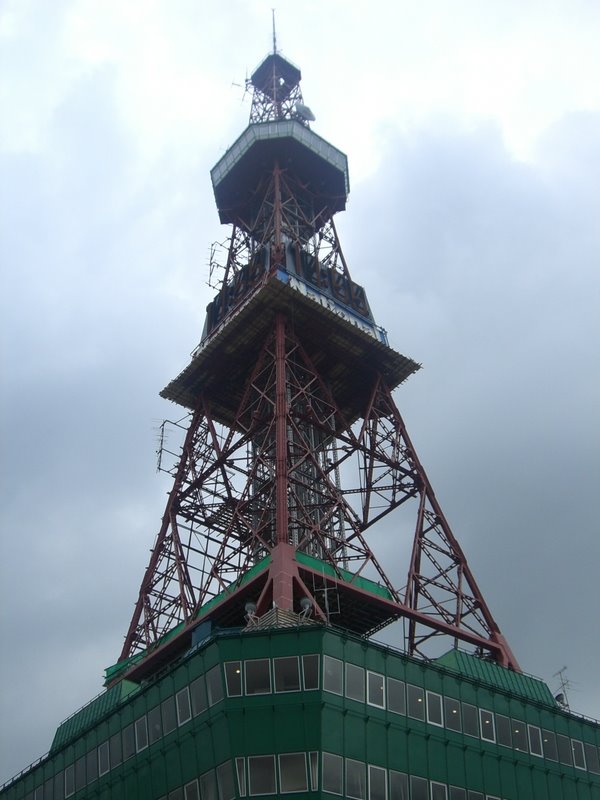
Leave Me Alone

An agitated polar bear at the nationally-renown Asahiyama Zoo, Asahikawa, Hokkaido, July 2006.

All Aboard...

Believe it or not, this is a train station. There's not even a station master on the premises.

17 October 2006
Rouru Taido!
I just saw an old Japanese guy wearing a University of Alabama baseball cap near the train station. That's something I thought I'd never see in Japan.
15 October 2006
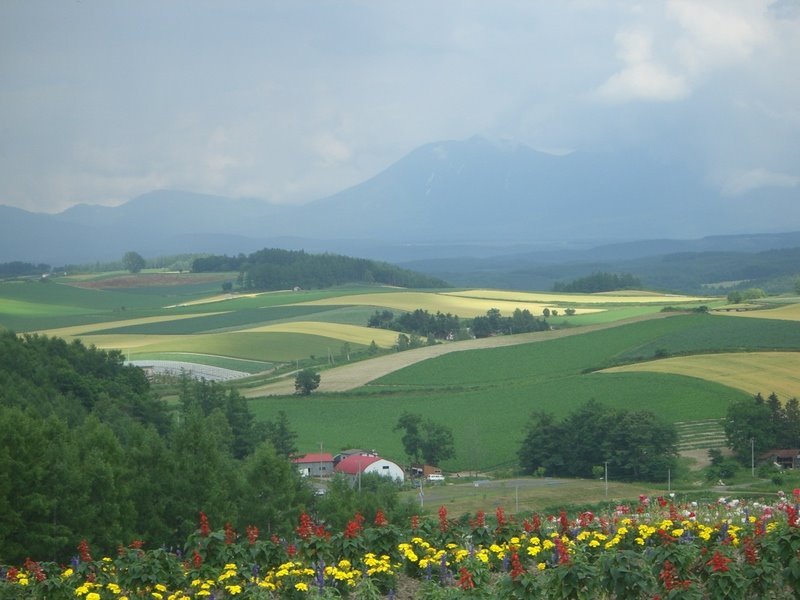

Purple, Purple Everywhere!

Lavender fields in Nakafurano, Hokkaido, July 2006. This may be the most famous tourist attraction in Hokkaido, and it only lasts for about a month. Needless to say, the pathways were packed (although you can't tell from this picture - a testament to my great photo skills).

11 October 2006
Hot Air

Me in front of a hot-air balloon in Furano, Hokkaido, July 2006. Now, I went here thinking we were going to fly over the town and do a bit of sightseeing from the sky. But we just went up about 200 feet, stayed up there for 3 minutes and came back down. The balloon was tied to the ground the whole time. And we waited in line for that?

05 October 2006



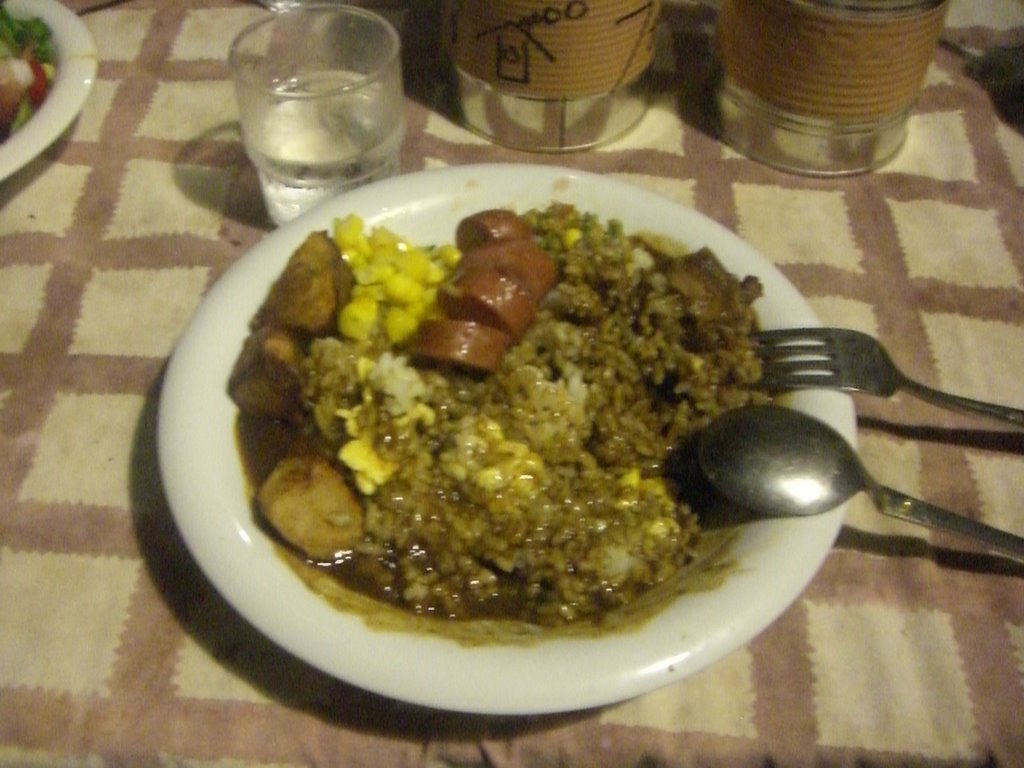
Welcome to Hokkaido

It's about time for me to post the pictures from my second trip to Hokkaido, back in July of this year. I'll start with a picture of our arrival at the (very small) airport in Obihiro.
03 October 2006
Japanese models in Japan? That's so 1950s...
Unlike many ex-pats here, I try to avoid Japan-bashing when I can. After all, Japan is Japan, and the U.S. is the U.S. But I’ve noticed something there that’s really starting to irk me.
If you look at the advertisements in this country – TV, magazines, subway, etc. – you have to be amazed at the sheer amount of foreigners that adorn them. Go into a clothing store, and see pictures of foreigners wearing Japanese-made clothing. Watch TV, and see foreigners drinking alcohol only made in Japan, or driving a made-for-Japan automobile in the streets of Japan. (It should be noted that 99% of the time, these foreigners are Caucasian.)
In addition to that, I guarantee you that if you look at any advertisement or catalog advertising pajamas, underwear or lingerie, 9 times out of 10, the models will be (white) foreigners. (And not the type of mature models we see in the States, either; usually they’re skinny and high-school-student-looking.)
This drives me crazy. After all, this is Japan, where about 95% of the population is ethnically Japanese. Why in the world do a disproportionate number of ads have foreigners? What makes Japanese advertising companies want to whip up ads with white people?
I truly don’t understand this, even though I’ve heard two reasons for this. a) Japanese have an inferiority complex, and b)Japanese think foreigners look more beautiful. I don’t by any of that. First, the Japanese I know always defend their customs and heritage. They tend to not bash themselves (unless they’re talking about yamanba). Second, there are plenty of beautiful Japanese out there. How many girls want to be like Ayumi Hamasaki, and how many girls drool over those stupid Johnnies boy bands?
My family and relatives used to subscribe to prominent African-American magazines like Jet and Ebony. You would see nothing but blacks in the ads, whether its McDonalds or Buick. Could you imagine the outcry if they instead had white models, or Hispanic ones? Back home every now and then, I would watch Univision or Telemundo, just for kicks. The commercials, 9 times out of 10, had Hispanics in them. What if they started to put Asian models in them? Do you think Hispanics would be satisfied?
Maybe it’s just me, but it just makes sense that if you are going to target a group of people, you want your ads to represent that people well. Apparently, many Japanese advertisers have a different philosophy, one I can’t figure out.
If you look at the advertisements in this country – TV, magazines, subway, etc. – you have to be amazed at the sheer amount of foreigners that adorn them. Go into a clothing store, and see pictures of foreigners wearing Japanese-made clothing. Watch TV, and see foreigners drinking alcohol only made in Japan, or driving a made-for-Japan automobile in the streets of Japan. (It should be noted that 99% of the time, these foreigners are Caucasian.)
In addition to that, I guarantee you that if you look at any advertisement or catalog advertising pajamas, underwear or lingerie, 9 times out of 10, the models will be (white) foreigners. (And not the type of mature models we see in the States, either; usually they’re skinny and high-school-student-looking.)
This drives me crazy. After all, this is Japan, where about 95% of the population is ethnically Japanese. Why in the world do a disproportionate number of ads have foreigners? What makes Japanese advertising companies want to whip up ads with white people?
I truly don’t understand this, even though I’ve heard two reasons for this. a) Japanese have an inferiority complex, and b)Japanese think foreigners look more beautiful. I don’t by any of that. First, the Japanese I know always defend their customs and heritage. They tend to not bash themselves (unless they’re talking about yamanba). Second, there are plenty of beautiful Japanese out there. How many girls want to be like Ayumi Hamasaki, and how many girls drool over those stupid Johnnies boy bands?
My family and relatives used to subscribe to prominent African-American magazines like Jet and Ebony. You would see nothing but blacks in the ads, whether its McDonalds or Buick. Could you imagine the outcry if they instead had white models, or Hispanic ones? Back home every now and then, I would watch Univision or Telemundo, just for kicks. The commercials, 9 times out of 10, had Hispanics in them. What if they started to put Asian models in them? Do you think Hispanics would be satisfied?
Maybe it’s just me, but it just makes sense that if you are going to target a group of people, you want your ads to represent that people well. Apparently, many Japanese advertisers have a different philosophy, one I can’t figure out.
Subscribe to:
Posts (Atom)